A First Visit to a Nearby Park: Notice the Quiet Corners
A first visit to a nearby park feels calmer when you follow sound, edges and sheltered pauses instead of trying to see every path and feature.
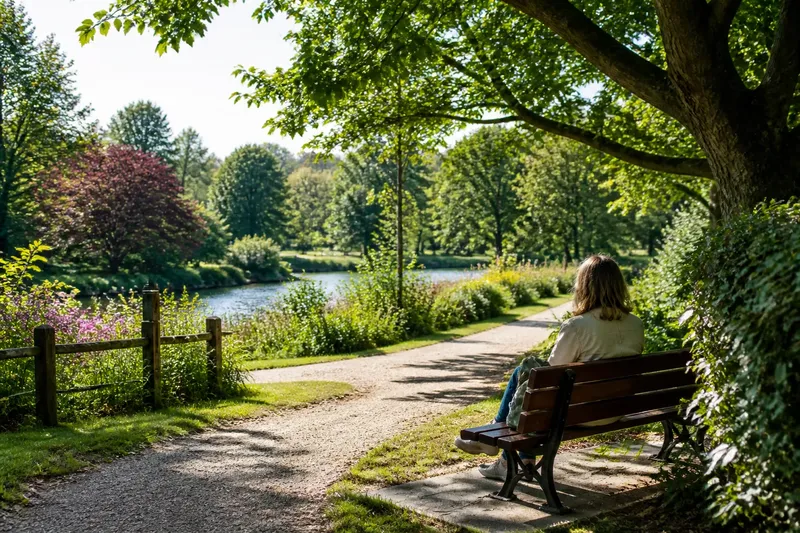
A first visit to a nearby park is easier when you stop trying to cover the whole place. Choose one path, notice where the sounds change, and leave room to pause at an overlooked edge. That gives you a feel for the park without turning a quiet outing into a route-planning exercise.
Unfamiliar parks can be harder to read than they look. A path may split without a clear sign; a busy play area can drown out birdsong; a bench may be exposed to wind or passing traffic. Treat these as useful clues, not reasons to rush on. The aim is to find a small, comfortable corner of the park and understand what makes it feel restful.
What if the park feels bigger than expected?
A broad map, several entrances and a web of paths can make it seem as though you need to choose the perfect route before setting off. Usually, the pressure comes from treating the park as a list of attractions to tick off. On a first visit, you need only a simple point of orientation and permission to turn back.
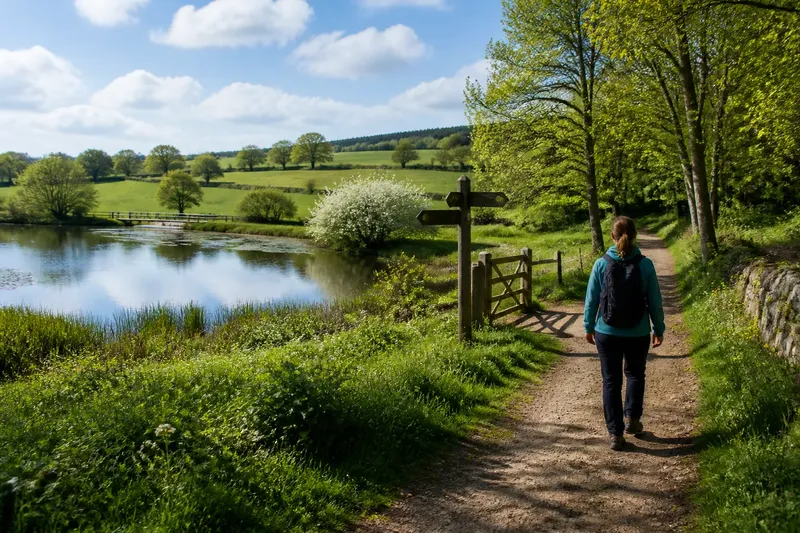
Look for a main path, a recognisable landmark or a sign near the entrance. Then take the first branch that looks inviting, rather than trying to plot a circuit. Keep track of an obvious feature behind you, such as a gate, a distinctive tree or a path junction, so returning feels straightforward.
If the area is larger than you expected, set a natural stopping point: the next bench, a patch of trees or a bend in the path. Reach it, pause, and decide whether another short stretch feels appealing. This is more useful than pressing on because a map suggests there is more to see.
What if every path looks much the same?
Repeated paths can be disorienting when they pass similar lawns, trees or fences. The cause is often looking only ahead, where one stretch of gravel or paving resembles the next. Quiet edges provide clearer markers because they change from one area to another.
Notice the boundary beside the path: a hedge giving way to a low wall, a line of trees thinning near a gate, or a grassy bank meeting a pond. These details help you tell one stretch from another and can guide a later turn back. They are more useful than trying to memorise every bend.
Choose one feature to notice at each junction before you continue. It might be a sign, a change in the surface or a tree leaning over the path. If you lose your bearings, retrace the last stretch to a recognisable junction rather than choosing a new shortcut through unfamiliar ground.
What if nearby noise makes it hard to settle?
Noise often changes gradually rather than stopping at a clear boundary. Traffic may remain audible beneath the trees; children playing may be close to a path without being visible; a sports area may be quiet between bursts of activity. Moving a little farther along an edge can reveal a different sound balance.
Pause briefly at a few points and listen for what is near, what is distant and what comes and goes. You do not need to identify every bird or machine. Try noticing whether leaves soften the traffic, whether voices carry across open grass, or whether a stream masks other sounds.
If a spot feels too busy, move towards a planted border, a sheltered bend or the far side of a path junction. Think of the park like a room with a window open: stepping away from the opening may reduce the sharpest noise, even if you can still hear the street. A quieter corner need not be silent to feel calmer.
What if a promising corner has nowhere to pause?
An attractive patch of shade may be beside a narrow path, on a damp bank or too exposed to wind. The usual mistake is to choose a place for its appearance alone. A useful pause needs room to stand or sit without blocking other visitors, and a surface that feels comfortable enough for a short rest.
Check for a bench, a low wall where sitting is appropriate, or a broad patch of dry ground beside—not on—the path. Notice whether branches drip after rain, whether the ground slopes, and whether your chosen position leaves space for people to pass. If it does not, move on; a good pause should not make the path awkward for someone else.
Say you reach a shaded corner with a bench, but the seat faces a busy path. Imagine moving to the bench’s quieter end, where a hedge screens part of the view. You could then sit without blocking anyone and listen to the leaves behind you. If the hedge offers no real shelter, the observable clue is that the traffic remains just as sharp; try the next bend instead.
What if signs or barriers interrupt your exploring?
A closed gate, rope barrier or notice can break the route you had imagined. It may mark a maintenance area, a protected patch of planting or a path that is not open to visitors. The useful response is to treat the boundary as part of the park’s layout, rather than hunting for a way around it.
Read the sign, follow the open route and look for a parallel path or a public viewpoint. A fenced wetland, for instance, may still be visible from a nearby path without entering its planted margin. If a sign gives directions or asks visitors to keep clear, follow it. Local rules and the park’s own notices determine where access is permitted.
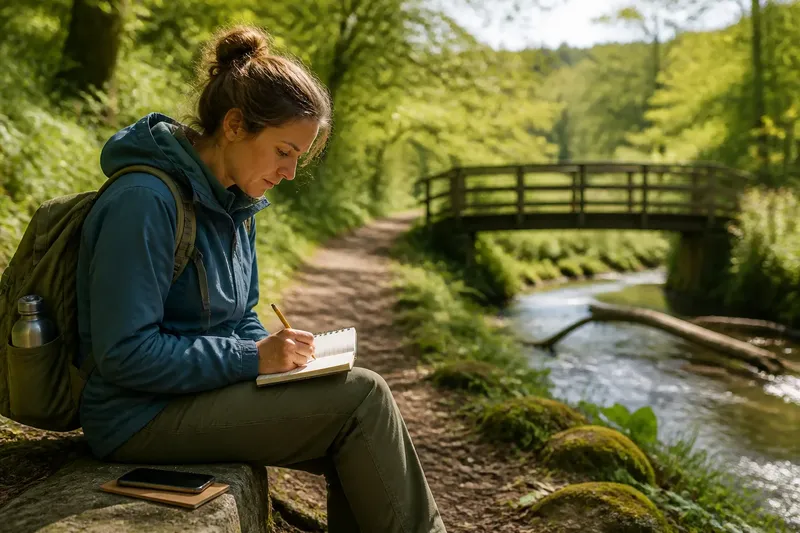
When a route ends at a barrier, pause and look back along the open path. A boundary may make an overlooked edge more noticeable: reeds beside a pond, a shaded strip beneath trees or the change from maintained lawn to rough grass. You can appreciate the view without crossing into a closed area.
What can a first visit teach you about quiet corners?
How do I find a quieter spot in a busy park?
Walk away from the entrance and the most obvious gathering place, then pause near a planted edge or a bend. Listen for a moment before choosing a place to stay; a spot that looks secluded may still sit beside a busy route.
How long should I spend exploring one area?
Stay until you have noticed a change in the sound, light or activity, then decide whether you want to continue. There is no need to cover a set distance: a short visit can still show you how one corner differs from another.
What should I notice on a first park visit?
Look for path junctions, useful landmarks, changes at the park’s edges and places where wind or sound shifts. These clues help you understand the layout and choose a comfortable spot without having to memorise the whole grounds.
Is it all right to leave the park without seeing everything?
Yes. Turning back from a pleasant pause is a sound way to finish a first visit, especially if the park still feels unfamiliar. You can return another day with a clearer idea of which paths or corners you would like to explore.
How can you leave with a useful sense of the place?
Before heading out, notice the route back to your entrance and one or two landmarks along it. You might also recall which edge felt sheltered, where traffic was clearest, or which junction led to the bench you liked. A simple mental note is enough; you do not need to make a complete map.
For a first visit to a nearby park, success can mean finding one comfortable place to pause and learning how its surroundings change. Leave other paths for another time. On your next visit, that familiar entrance and remembered corner will give you a starting point, while the park still has room to surprise you.