Carrying a Picnic by Hand Without a Daypack
Carrying a picnic by hand is easier when the food suits the carrier. Choose a basket, tin or cloth bag, then pack for a steadier, cleaner walk.
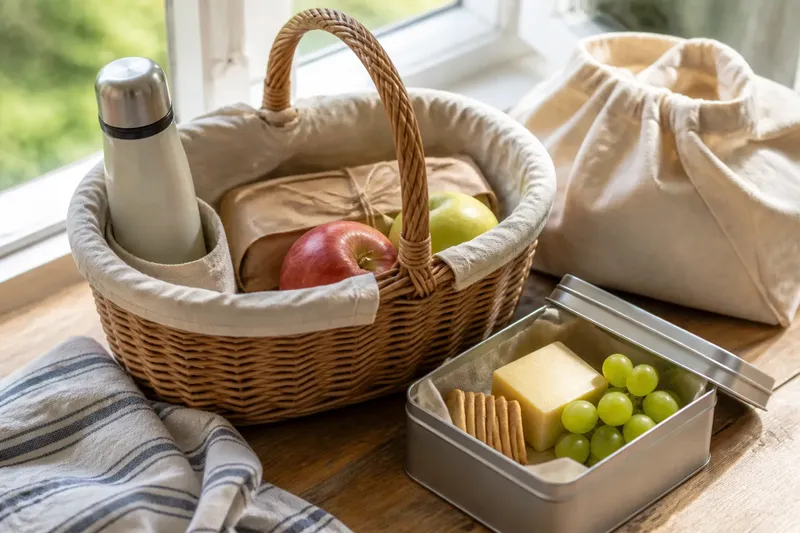
Carrying a picnic by hand works best when the food suits the carrier, not the other way round. Set out the meal first, then choose a basket, tin or cloth bag that will protect it without making the walk awkward.
A rigid carrier keeps its shape but takes up space; a soft one is easier to fold away but offers less protection. Treat the choice as a simple trade-off, like using a tray: it keeps things orderly, but you still need to balance what you put on it.
What does the food need protection from?
Lay out the food before choosing a container. Separate anything that can bruise, leak, crumble or needs to stay cool. A wrapped sandwich and firm fruit are easier to carry than a soft tart or an open jar of dressing.
Think about the route and where the meal will wait. A lidded container may help if you will set it down while walking elsewhere; for a short walk to a nearby patch of grass, a lighter carrier may be more comfortable. Keep liquids in a sealed bottle and upright, away from food a spill would spoil.
Choose food that needs little serving equipment: wrapped bread, firm fruit, cheese in a sealed wrapper or dry snacks. For food that needs chilling, use suitable insulated storage and follow its food-storage guidance.
Which carrier suits your picnic?
Choose by the food’s shape and fragility, rather than by the carrier’s name.
- Basket: Check the base for gaps and the handle for looseness. If both are sound, use it for firm or neatly arranged food; if not, choose a closed carrier or line the gaps and use a separate handle-safe container.
- Picnic hamper: Check that the lid closes and that the meal needs the structure it provides. If it keeps delicate food in place, use it; if it is bulky for a simple lunch, choose a smaller carrier.
- Metal tin: Check that it is clean and closes securely. If it is intended for food and the contents are dry, use it for items that need protection from crushing; if food is wet or the seal is uncertain, use a suitable sealed food box instead.
- Cloth bundle or bag: Check that the fabric is clean and the food is wrapped. If the meal is firm and unlikely to squash, carry it this way; if an item is delicate, place it in a small rigid container or choose a structured carrier.
Inspect seams, hinges, handles and fastenings before reusing an old carrier. Use a clean container intended for food, and follow its label or manufacturer’s instructions where they apply.
How should you pack a hand-carried picnic?
Start with the firmest, flattest items at the base. Add wrapped food that can tolerate gentle contact, then place delicate items on top with a clean tea towel or cloth between layers. Keep bottles upright and separate from food that could be damaged by a leak.
Use a small sealed food box for loose or moist ingredients. If the carrier has no dividers, make simple boundaries with wrapped food or folded cloth. Leave clear space around the handle so your hand does not press on the meal.
Keep the load balanced. A bottle at one end can make a basket tip as you walk; move heavy items towards the centre or carry a leak-prone bottle separately.
How can you tell if the load is comfortable?
Before leaving, lift the packed carrier, walk a short distance indoors, turn and set it down. Check whether the handle rubs, the food shifts or the carrier tilts. If it feels awkward, remove an item, change the arrangement or switch carriers.
Say you have a wrapped lunch, two firm pieces of fruit and a sealed bottle for a nearby riverside seat. You put the lunch flat at the base of a cloth-lined basket, the fruit above it and the bottle upright in a side compartment. On an indoor walk the basket tips towards the bottle, so you move the bottle to a small separate bag; the expected result is a steadier basket and less risk of a spill pressing against the lunch.
What should you check before leaving?
- Handle and seams: Check for cracks, loose stitching or wobble; if the grip is unreliable, use another carrier, and if it is sound, proceed with the packed load.
- Closure: Check that the lid or fastening stays shut when lifted; if it opens, secure it with a suitable wrap or choose a different container, and if it stays closed, pack as planned.
- Food position: Check that delicate items are not beneath heavy ones; if they are, repack firm food at the base, and if they are not, leave the arrangement in place.
- Liquid: Check that each bottle stands upright and closes securely; if it leaks or cannot stand safely, carry it separately in a sealed container, and if it is secure, keep it upright.
- Cleanliness: Check for crumbs, residue or an unpleasant smell; if you find any, wash and dry the carrier before loading it, and if it is clean, use it.
- Comfort: Check the grip with the full load; if it strains your hand, remove an item or change carriers, and if it feels manageable, set off.
What questions come up about carrying a picnic by hand?
Is a basket better than a bag for a picnic?
A basket keeps its shape and can protect firm food, while a bag is easier to store and may be lighter. Choose the basket for food that needs structure; choose the bag for a simple meal that can tolerate gentle pressure.
How do you stop food being crushed in a basket?
Place firm, flat items at the base and delicate food near the top, with a clean cloth between layers. Keep heavy bottles upright and away from soft food.
Can you carry a picnic in a cloth bundle?
Yes, if the food is wrapped, firm and unlikely to squash. Put delicate items in a small rigid box and keep liquids in a separate sealed container.
What food is easiest to carry without a daypack?
Choose food that is already wrapped, holds its shape and needs little serving equipment, such as sandwiches, firm fruit or dry snacks. Use suitable insulated storage for food that needs chilling and follow its storage guidance.
How should you clean and store the carrier?
Collect wrappers and scraps before packing up, and keep damp cloths separate from dry food containers. At home, empty the carrier, remove crumbs, wipe it clean and let it dry fully before putting it away. Follow any care instructions supplied with the carrier.
For carrying a picnic by hand, match the container to the meal and the way you will hold it. A simple lunch may need only a clean cloth bag, while delicate food calls for firmer protection; checking the grip and balance before setting off helps you decide which one suits the outing.