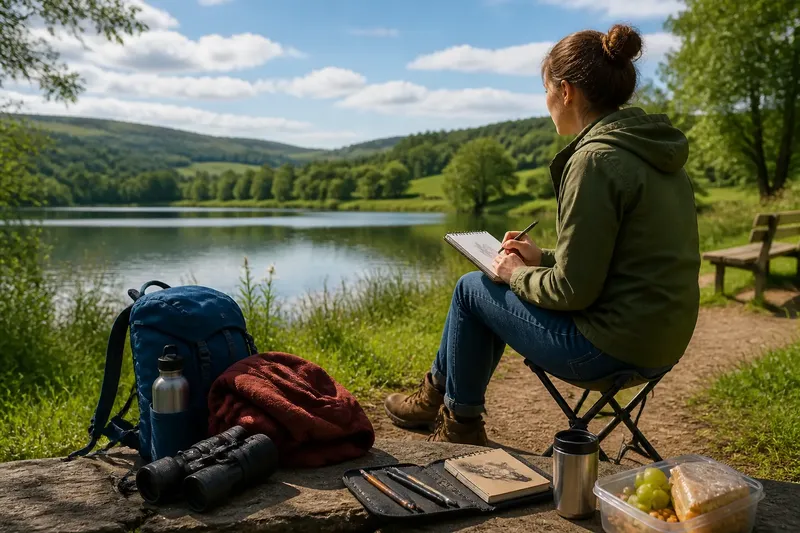
Why a Loop Can Feel Like a Bigger Outing
A loop walk can feel like a fuller outing without adding distance: choose a route with changing views, a clear turning point and an easy return.
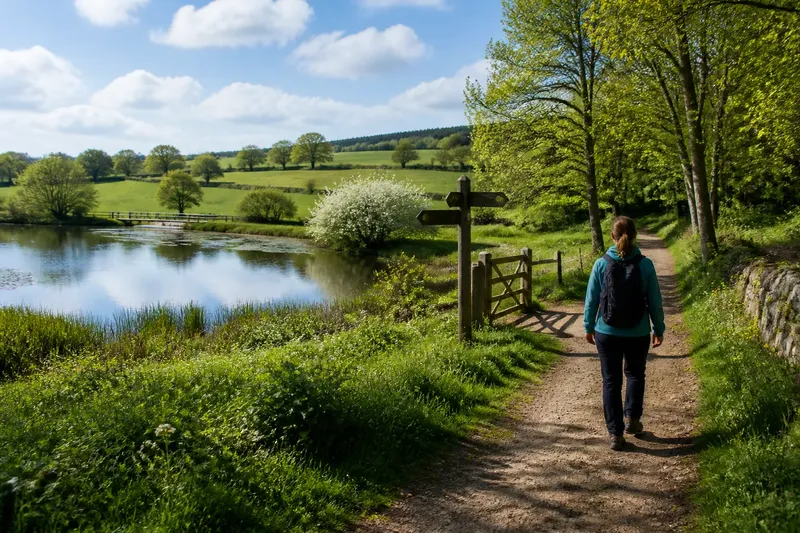
A loop walk can feel like a fuller outing than an out-and-back route of similar length because the return brings different ground, views and small decisions. If you are choosing a loop walk, look for a change of scene and a satisfying shape, not a longer distance on the map.
What makes a loop feel like an outing?
On an out-and-back walk, you retrace the same route, so the return can feel like a repeat. A loop gives each stretch a different role: the outward path leads somewhere, a bend or junction marks a turning point, and another path carries you home. That sequence can make the walk feel like a small journey even when the route stays close to familiar ground.
Variety need not mean dramatic scenery. A path beside a stream might join a woodland track, pass a meadow edge and return by a quiet lane. Changing surfaces, tree cover, sounds or sightlines give your attention fresh things to settle on. Think of the route as a story with a beginning, a change and a return, rather than a line whose value depends on how far it runs.
This is a little like turning a familiar room into a circuit by walking around the furniture: you encounter the same space from another angle. Outdoors, that shift can make even familiar surroundings feel less repetitive.
Which kind of loop fits your day?
Choose for the outing you want, not for the most ambitious-looking line on a map. The right loop depends on your time, company, energy and appetite for uncertainty.
- If you want an easy, unhurried walk: choose a compact loop on clear paths, with a landmark such as a pond, bridge or field gate to mark the far side. It gives the walk a destination without making the return complicated.
- If you want changing scenery: look for a route that links distinct settings, such as open ground and tree cover, or a waterside path and a village lane. A modest loop with clear contrasts may feel more varied than a longer route through similar terrain.
- If you are walking with children or a mixed-pace group: favour a simple circuit with a visible turning point and places to pause. Familiar landmarks make it easier to keep everyone oriented and let the group adjust its pace without losing the route’s shape.
- If you want a quiet stretch: check whether the loop includes a path away from the busiest entrance or central facilities. A circuit can help you leave a crowded starting area behind while still returning to a known point.
- If you are unsure about conditions or energy: pick a route with a straightforward short-cut back, or one that passes close to the starting point midway. That option lets you shorten the outing without treating the choice as a failure.
How do you choose a loop without chasing distance?
Start with a place you can reach easily, then check a current local map or the park’s route information. Look at how the paths join, whether the loop uses public rights of way or designated park paths, and whether a busy road or awkward crossing interrupts the circuit. A route that closes neatly on the map may feel less satisfying if its sections have little in common or its return is hard to identify.
Consider the route’s sequence. Does it offer a feature to head towards, a noticeable change in the middle and a return path that feels distinct? Are there clear junctions, signs or landmarks to help you make decisions? A loop can be short and still feel complete if you can tell where it turns and what changes on the way back.
Say you have an hour and know a local green space with a pond and a wooded edge. Imagine choosing a path that passes the pond on the way out, turns at a signed junction and returns along the tree line. The expected observable result is a walk with a clear change of scene and a different view on the return, without adding distance just to make the outing seem more substantial.
Before setting off, check the route surface and any access notices. Mud, steep sections, gates or seasonal closures can change which circuit suits your group. Where access depends on local rules or posted instructions, follow those rather than assuming every mapped path is open.
What questions help settle the choice?
Is a loop always better than an out-and-back walk?
No. An out-and-back can be the better choice when one destination matters, such as a viewpoint or a particular stretch of river, or when you want a simple route you can turn back from at any point. Choose the loop when seeing different ground on the return is part of the appeal.
How can I tell if a loop is easy to follow?
Check for named paths, clear junctions and landmarks that appear in the expected order on a map. If several tracks cross without signs, choose a simpler circuit or keep the map available so you can confirm turns as you go.
What if the loop feels too long once I start?
Use a marked short route or a clear path back towards the start if one is available. Before setting off, identify that option on the map so you can make the decision calmly rather than pressing on just to complete the circuit.
Does a loop need a special destination?
No. A bridge, a change in woodland, an open view or simply the point where the path bends can give the outward leg a focus. The return can then offer a different perspective without requiring a landmark people travel to see.
What makes the return feel satisfying?
Let the route’s changing details do the work. Notice where the light shifts, where the surface changes from gravel to earth, or how a familiar landmark looks from the other side. You do not need to turn every walk into a project; one or two differences are enough to make the return feel like part of the outing rather than a journey back over old ground.
When you compare routes, ask which one offers the clearest change of scene and the easiest way to understand its shape. A loop walk earns its sense of occasion through progression, not distance. Pick a circuit that suits the people with you, leaves room to turn back if needed and gives you something different to notice on the way home.